Feed the Garden Food as Fertilizer
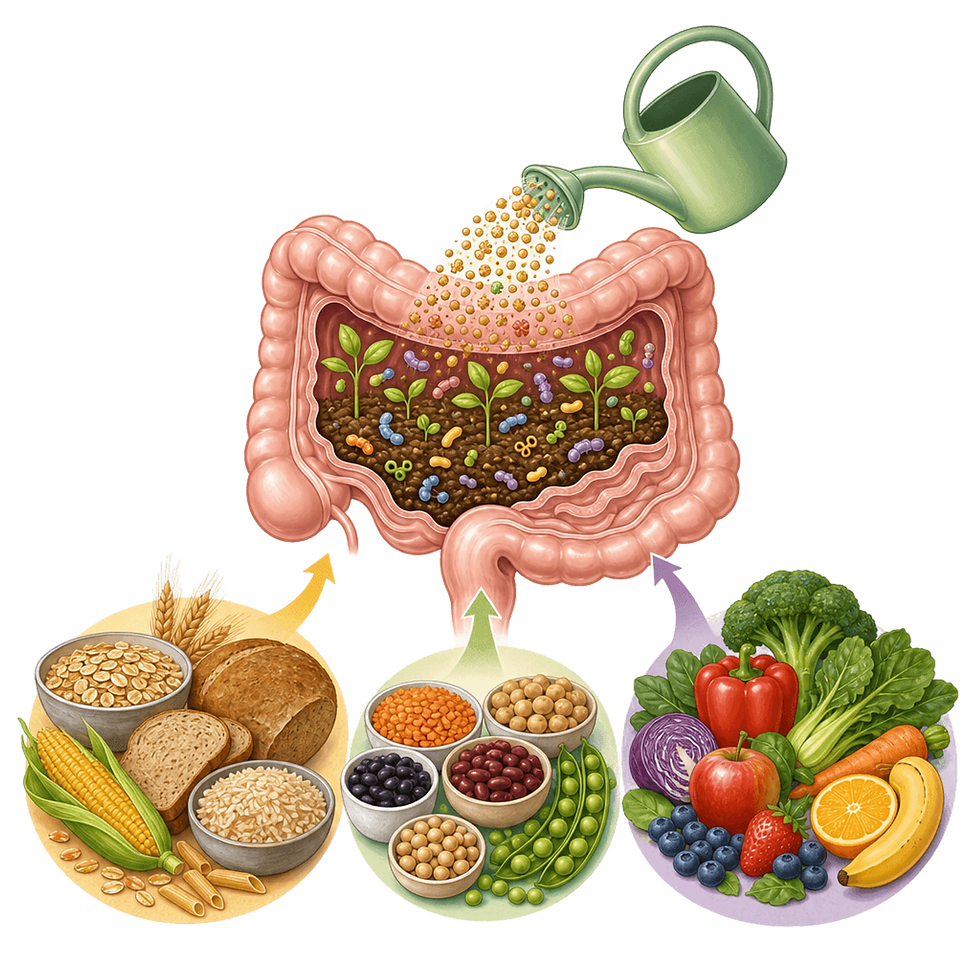
You now know who lives in your gut garden trillions of bacteria, most of them working for you. But here's the question nobody asks: what do you feed them?
Every time you eat, you are either feeding your gut garden or starving it. The foods that feed your bacteria best all have one thing in common: they come from plants.Today you find out which foods act as the best fertilizer for your gut and which ones leave your bacteria with nothing to eat.
Learning Objectives
By the end of Module 4, students will be able to:
-
Identify at least five fiber-rich foods that feed gut bacteria (oats, brown rice, beans, apples, broccoli).
-
Explain why plant foods are the primary source of fiber and bacterial fuel.
-
Tell the difference between foods that feed gut bacteria and foods that don't.
-
Build a simple meal that includes gut-healthy foods.
Gut Health Concepts: Food as Fertilizer
Food Is Fertilizer: Just as plants need fertilizer to grow, gut bacteria need food to thrive. The best fertilizers for your gut garden are fiber-rich plant foods.
Three Categories of Gut Fertilizers:
• Fuel (Whole Grains): Oats, brown rice, whole wheat, quinoa provide steady energy and fiber.
• Builders (Legumes): Beans, lentils, chickpeas, peas high in fiber and protein, support gut lining repair.
• Diversity (Fruits & Vegetables): Apples, berries, broccoli, carrots provide a wide range of fibers and nutrients that feed different bacterial species.
Variety Feeds Variety Different bacteria prefer different types of fiber. Eating a diverse diet supports a diverse microbiome.
Processed Foods Are Poor Fertilizer. Highly processed foods (candy, soda, chips) are low in fiber and don't feed gut bacteria well. They're like empty soil no nutrients for the garden.
Concept Overview
Concept 1: Fiber-Rich Plant Foods
Garden Link: Just as plants need fertilizer to grow, gut bacteria need fiber-rich plant foods to thrive.
Concept 2: Whole Grains (Fuel)
Garden Link: Provide steady energy and fiber, acting as the long-lasting nourishment for your internal garden.
Concept 3: Legumes (Builders)
Garden Link: High in fiber and protein, they support gut lining repair, keeping your garden's soil healthy and strong.
Garden Link: Variety feeds variety; a colorful range of plants feeds a diverse population of bacterial species.
Concept 4: Eating a Rainbow (Diversity)
Concept 1: Plant Foods = Bacterial Fuel
Deep in your gut garden, trillions of beneficial bacteria are hard at work, helping you digest food, boosting your immune system, and even affecting your mood. But just like a real garden, these tiny residents need the right fuel to stay strong and healthy. That fuel is fiber found in plant-based foods.
When you eat whole grains, vegetables, and fruit, you are delivering high-quality fertilizer directly to your internal ecosystem. These bacteria break down the fiber that our own bodies can't digest, and in return, they produce healthy chemicals that protect our bodies and brains. If we don't feed them enough plant fuel, the beneficial bacteria can become weak, making it easier for weed bacteria to take over.
Garden Connection: Fiber-rich plant foods act as the essential organic fertilizer that keeps your gut garden flourishing and vibrant.
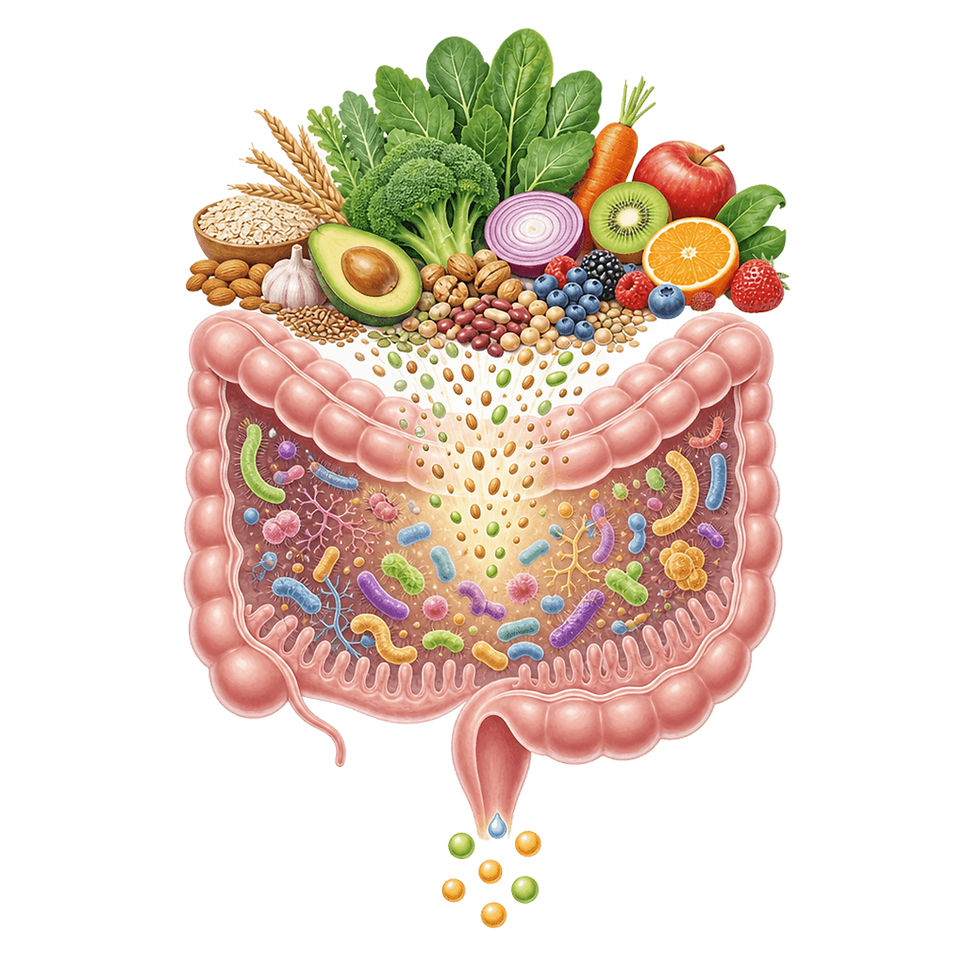
Concept 2: Whole Grains Are Gut Gold
Whole grains are essentially the long-lasting battery for your gut garden. While simple sugars like candy burn out quickly, the fiber in whole grains provides a slow, steady release of fuel for your bacteria throughout the day. This steady energy helps specific bacteria thrive, producing gut gold precious chemicals that keep your body working at its peak.
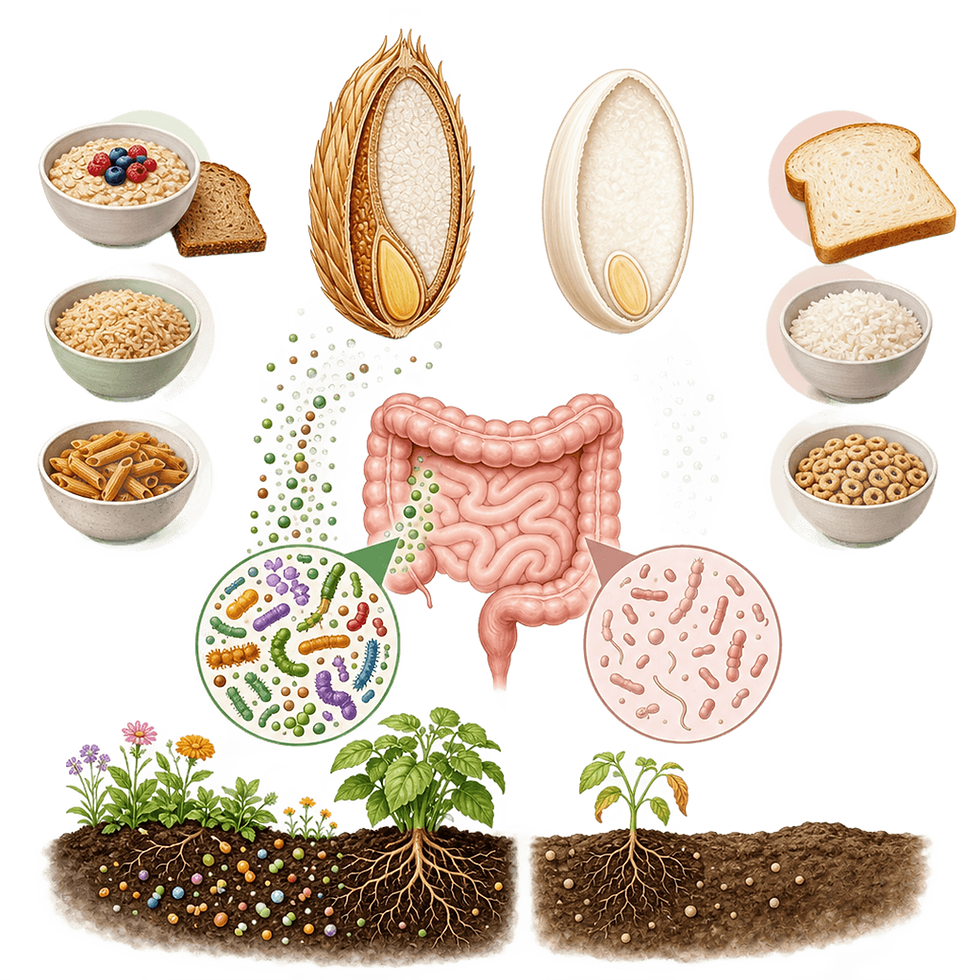
Gut Gold (Best Fuels)
- Oats
- Brown Rice
- Whole Wheat
- Quinoa
- Buckwheat
- Barley
Weak Fuel (Avoid)
- White Bread
- Sugary Cereals
- White Pasta
- Pastries
- Cookies
- White Rice
Garden Connection: Whole grains are the long-lasting nourishment that acts like slow-release pellets for your internal garden, ensuring it stays rich and productive all day long.
Concept 3: Beans Are Bacterial Superstars
If grains are the batteries for your gut, beans and legumes are the builders. These foods are dual-purpose superstars because they are loaded with both protein and specialized fiber. While the protein helps build and repair your body, the unique fibers in beans act like high-quality building materials for the gut lining itself.
When beneficial bacteria eat bean fibers, they produce short-chain fatty acids. Think of these as the cement that strengthens the walls of your gut garden, preventing leaks and keeping the ecosystem secure. From lentils and chickpeas to black beans and kidney beans, these legumes ensure that your internal garden has a strong foundation and a healthy, resilient structure.
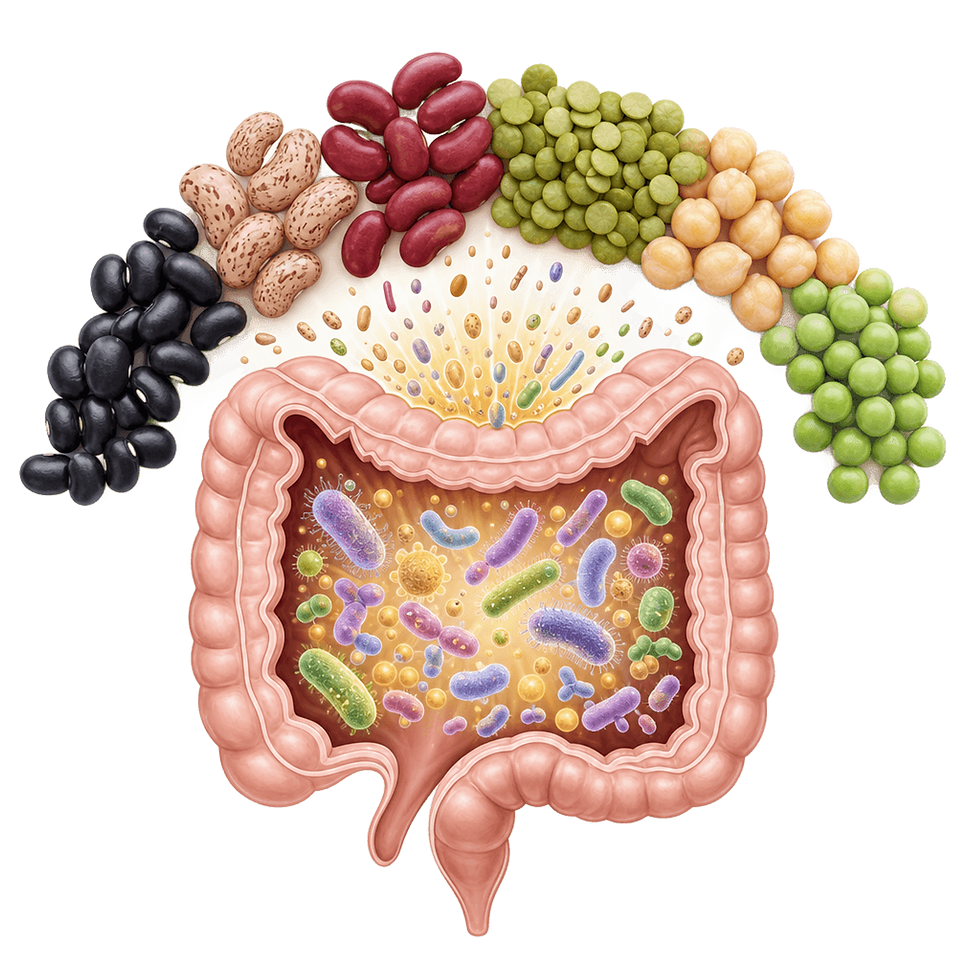
Garden Connection: Legumes provide the critical structural materials and biological cement that keep your gut garden's boundaries strong and its soil well-supported.
Concept 4: Eating a Rainbow = Feeding More Bacteria
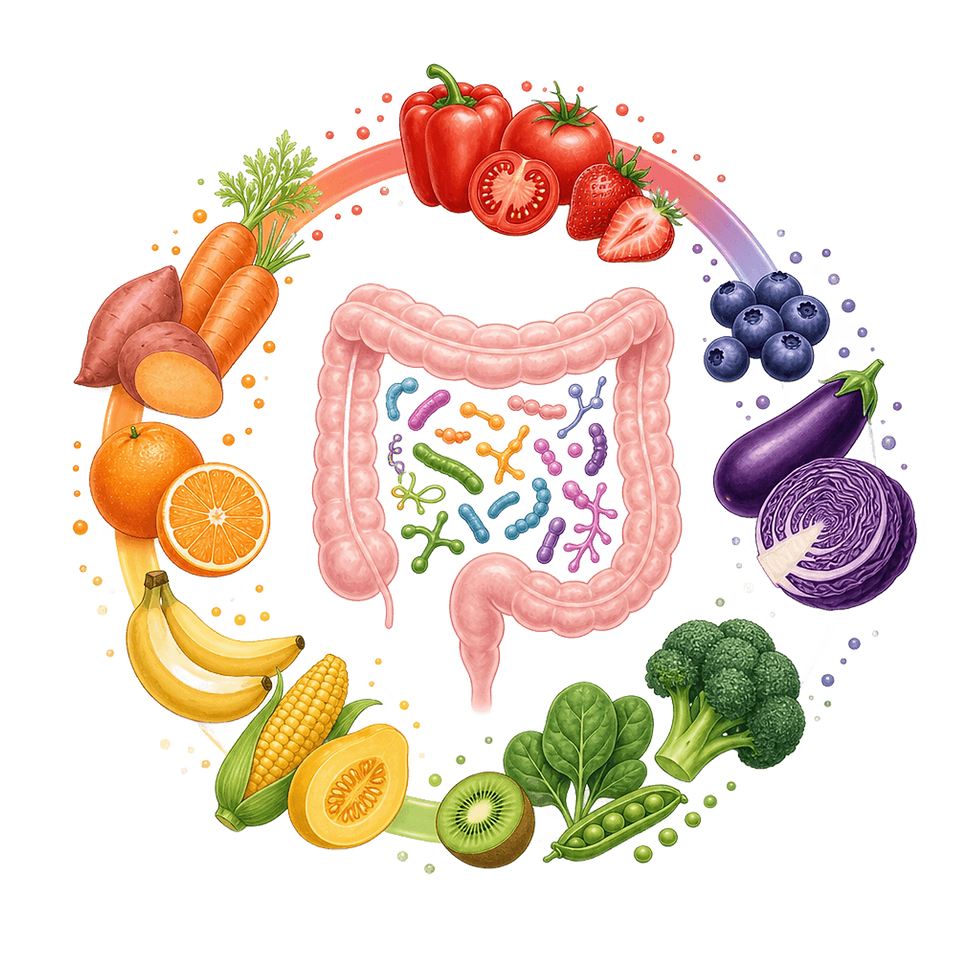
Just as a diverse garden needs many different types of plants, a healthy gut needs a wide variety of bacterial species. Each species' of bacteria prefers to eat different types of plant fibers and nutrients. By Eating a Rainbow consuming fruits and vegetables in every color you are providing a buffet of different fertilizers that support a diverse and thriving bacterial community.
Diversity is a sign of a strong gut garden. The more colorful your plate, the more diverse your gut bacteria become, making your internal ecosystem more resilient against weeds and environmental stress.
- Red (Apples, Berries, Tomatoes): Feeds bacteria that protect your heart.
- Orange/Yellow (Carrots, Peppers, Squash): Supports bacteria that help your eyes and skin.
- Green (Broccoli, Spinach, Peas): Nourishes species that strengthen your immune system.
- Blue/Purple (Blueberries, Cabbage, Eggplant): Feeds bacteria that boost brain health and memory.
- White/Tan (Garlic, Onions, Mushrooms): Supports species that help fight off bad weed bacteria.
Garden Connection: Variety feeds variety; a colorful range of plants ensures every type of beneficial seed in your internal garden gets the specific fertilizer it needs to bloom.
Key Vocabulary
🌾 Fiber
A type of nutrient found in plant foods. Nutrients are substances in food that your body uses carbohydrates (like bread, rice, and fruit) give your body energy, proteins build and repair things, and fats store energy. Fiber is a special carbohydrate your body cannot break down and digest but your gut bacteria can. That makes fiber the primary fuel for your gut bacteria.
🌱 Garden Link: The fertilizer that feeds your gut garden.
🌾 Whole Grains
Grains are seeds from plants like wheat, rice, and oats. A whole grain still has all three layers of the seed the outer bran layer (where most fiber lives), the germ (the core that has nutrients), and the endosperm (the starchy inside). Because the bran layer is still there, whole grains are rich in fiber. Examples: oats, brown rice, quinoa, whole wheat bread.
🌱 Garden Link: Premium fertilizer all the nutrients are still there.
🌾 Refined Grains
When grains are processed (put through machines to make them softer or last longer), the bran and germ layers are removed. What's left is mostly starch the plain, starchy inside with almost no fiber. Examples: white bread, white rice, most crackers and chips.
🌱 Garden Link: Fertilizer with the nutrients stripped out not much left for the garden.
🫘 Legumes
A family of plants whose seeds grow inside pods think beans, lentils, peas, and chickpeas. Legumes are packed with fiber and resistant starch (a type of starch your small intestine can't fully digest, so it travels to your colon where bacteria can use it). That makes them some of the best gut-bacteria food you can eat.
🌱 Garden Link: Super-fertilizer that bacteria love.
🍇 Phytonutrients
Phyto means 'plant' in Greek. Phytonutrients are helpful natural compounds found in plant foods — the things that give blueberries their deep color or broccoli its slightly bitter taste. They support your health, and gut bacteria can break many of them down too.
🌱 Garden Link: Special nutrients in the fertilizer that help specific bacteria thrive.
🍫 Polyphenols
A specific group of phytonutrients found in colorful fruits, vegetables, tea, and dark chocolate. The word poly means 'many' and phenol is the chemical family they belong to. Your gut bacteria can ferment (break down and process) polyphenols, turning them into helpful compounds for your body.
🌱 Garden Link: Colorful nutrients that feed bacteria and help them grow.
Myth VS. Fact
Myth: All carbohydrates are bad for you and your gut.
Fact: Complex carbohydrates, like whole grains, are the main source of fiber (fuel) for beneficial gut bacteria.
Garden Link: Refined carbs are like poor quality snacks for your garden, but complex grains are the power-pellets that keep it strong.
Myth: You need lots of animal protein to build a strong body and healthy gut.
Fact: Legumes (Builders like beans and lentils) provide both protein for you and specialized fiber for your bacteria.
Garden Link: Legumes are the structural material that rebuilds the garden walls, making the gut garden resilient and secure.
Myth: Eating just one type of superfood vegetable is enough for gut diversity.
Fact: Different bacterial species eat different types of plant nutrients; Eating a Rainbow ensures you feed as many different types as possible.
Garden Link: A rainbow of food feeds a rainbow of bacteria, leading to a vibrant, diverse garden with many different species growing together.
Activity Content: Build a Gut-Healthy Plate
🍽️ 20 minutes | Format: Hands-on / craft activity
Student Goal
Create a meal that includes at least 3–4 fiber-rich plant foods and explain why each one feeds your gut bacteria.
What You Need
- Paper plate (1 per student)
- Food cards or printed food images (cut out)
- Scissors, glue sticks, markers
Food Categories
- Whole grains: oats, brown rice, quinoa
- Beans/legumes: black beans, lentils, chickpeas
- Fruits: apples, bananas, berries, oranges
- Vegetables: broccoli, carrots, spinach
- Nuts/seeds: almonds, walnuts, chia seeds
Also Available (low fiber): White bread, chips, candy, soda, chicken, eggs
Steps
- Cut out food images and arrange them on your plate to build a balanced meal.
- Include at least 3–4 fiber-rich plant foods.
- Try to use at least 2 different colors of fruits or vegetables.
- Label each food and write one sentence explaining why it feeds your gut bacteria.
Class Discussion
- Which foods on your plate will feed your gut bacteria? Why?
- Which foods won't? Why not?
- If you could only choose three foods to feed your gut bacteria, which would you choose?
Teacher Guidance Build a Gut-Healthy Plate
Learning Goal: Students will apply their understanding of Fuel (grains), Builders (legumes), and Diversity (fruits/veggies) by creating a meal that contains at least one food from each category.
Misconception Note: Students often equate protein solely with meat. Emphasize that legumes (like beans and lentils) are Builders precisely because they provide both protein for humans AND fiber for bacteria.
Equity Note: When sorting, acknowledge that cultural food staples (like corn tortillas, dal, or sticky rice) all fit into these categories. Reinforce that "Gut Gold" can be found in every culinary tradition.
Case Discussion
Activity: Fiber Detective
GOAL
Use your detective skills to identify which foods are high in fiber (Gut Gold) and which are low in fiber (Poor Fertilizer).
How It Works
- Look at the Food Packaging from each item.
- Find the Nutrition Facts label on the back or side.
- Look for Dietary Fiber.
- Check the number of grams (g).
Fiber Detective Tracking Sheet
Food Item
Fiber (grams)
High or Low?
Oatmeal
White bread
Apple
Chips
Black beans
Rule: 3 or more grams of fiber per serving = High Fiber
Discussion
Which foods surprised you?
What do the high-fiber foods have in common?
Why do processed foods like chips and candy have almost no fiber?
Teacher Guidance: Fiber Detective
Learning Goal: Students learn to read nutrition labels and connect fiber content to gut health
Exit Ticket
Question 1 : List (Recall) Name five foods that are high in fiber and feed gut bacteria.
Answer: Any five plant foods like oats, brown rice, black beans, apples, broccoli, bananas, lentils, whole wheat bread, carrots, berries, sweet potatoes, etc.
Question 2 :True or False (Comprehension) Animal foods like meat and cheese contain fiber.
Answer: False. Fiber comes only from plant foods. Animal foods contain protein and other nutrients but no fiber.
Question 3 :Short Answer (Application) Why is it important to eat a variety of colorful fruits and vegetables?
What to look for in a strong answer:
• Different colors contain different types of fiber and nutrients
• Different bacteria eat different things
• More variety = more bacterial diversity = stronger gut garden
Example strong answer: Different colored fruits and vegetables have different types of fiber that feed different kinds of bacteria. If I eat a variety of colors, I feed more types of bacteria, which makes my gut garden more diverse and stronger.
You know what to feed the garden. Now find out why some food is better fertilizer when it's been cooked and cooled.